
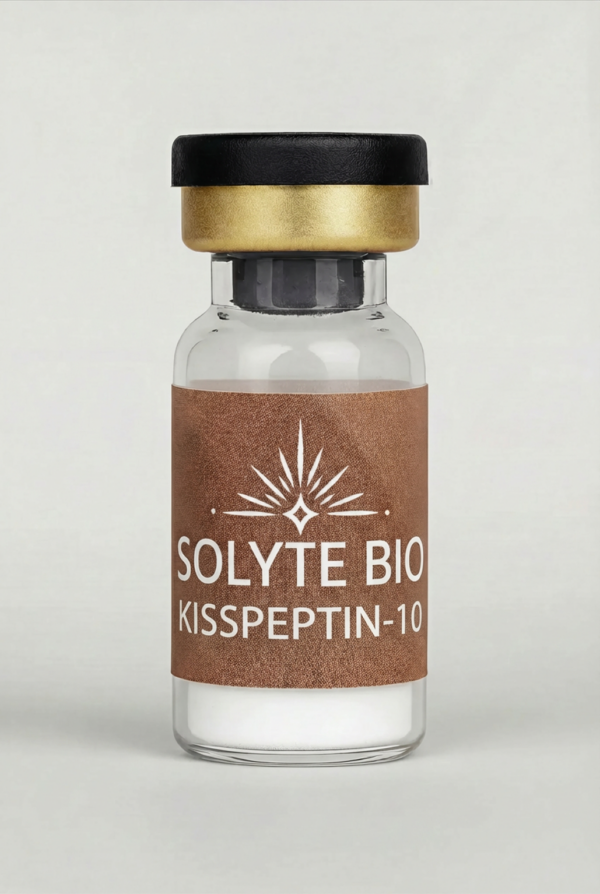
Kisspeptin – Research Use Only
Overview
Kisspeptin is a naturally occurring peptide belonging to the RFamide family and is encoded by the KISS1 gene. It is synthesized as a larger precursor protein that is enzymatically cleaved into shorter biologically active fragments, including kisspeptin-54, -14, -13, and -10. These peptides share a conserved C-terminal Arg-Phe-NH₂ (RFamide) motif, which is essential for receptor binding and biological activity.
In laboratory research, kisspeptin is widely studied as a ligand for the G protein-coupled receptor GPR54 (also known as KISS1R), with particular interest in endocrine and neuroregulatory signaling pathways.
Background
Kisspeptin plays a central role in regulating the hypothalamic-pituitary-gonadal (HPG) axis. In research settings, it is examined for its involvement in:
• Gonadotropin-releasing hormone (GnRH) signaling pathways
• Initiation of puberty and reproductive axis activation
• Hypothalamic neuroendocrine communication
• Placental biology and trophoblast signaling
• Tumor metastasis suppression mechanisms
The peptide’s interaction with the KISS1R receptor has made it a significant focus in endocrine research models exploring reproductive biology, hormone feedback regulation, and cellular signaling dynamics.
Due to its structural versatility and biological importance, kisspeptin remains a key compound in molecular and endocrine pathway investigations.
Common Research Applications
• Studying hypothalamic-pituitary-gonadal axis regulation
• Investigating GnRH release mechanisms
• Exploring neuroendocrine signaling pathways
• Examining reproductive hormone feedback models
• Evaluating metastasis-related cellular signaling mechanisms
Product Specifications
Form: Lyophilized peptide (research formulation)
Contents: Kisspeptin
Size:
• 10 mg
Total Active Ingredient:
• 10 mg per 1 vial
Chemical Formula:
• C₂₅₈H₄₀₁N₇₉O₇₈
Molar Mass:
• 5857 g/mol
CAS Number:
• 388138-21-4
PubChem CID:
• 71306396
Synonyms:
• KISS-1 (68-121)
• Protein KISS-1
• Gene KISS1 protein
Shelf Life:
• 36 months (when stored under recommended conditions)
Storage:
• –20 °C recommended for long-term storage
Reconstitution:
• Sterile water (research-grade only)
Intended Use:
• For laboratory research use only


Reviews
There are no reviews yet.